Ceiling ideas 2005/08/29
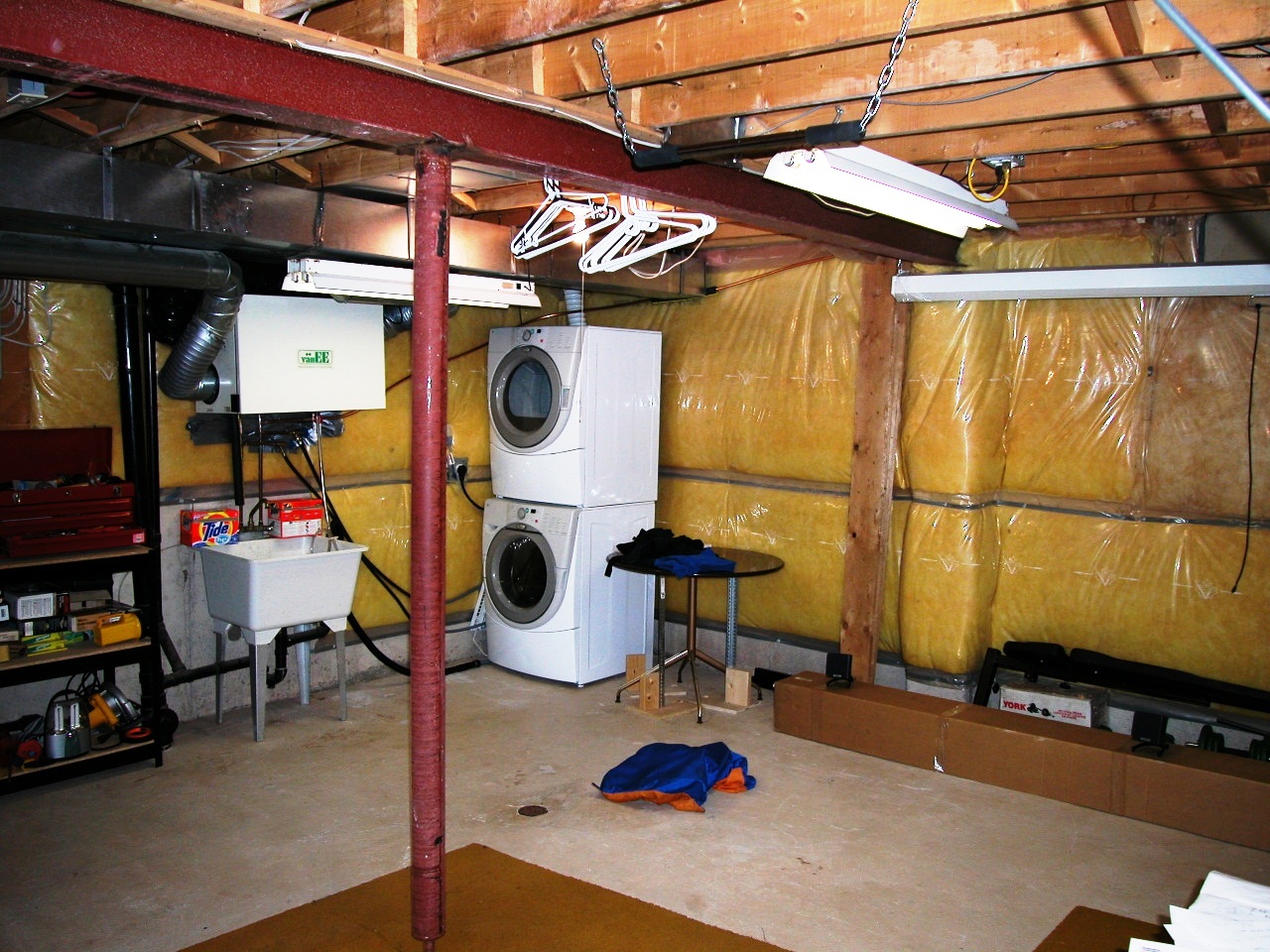
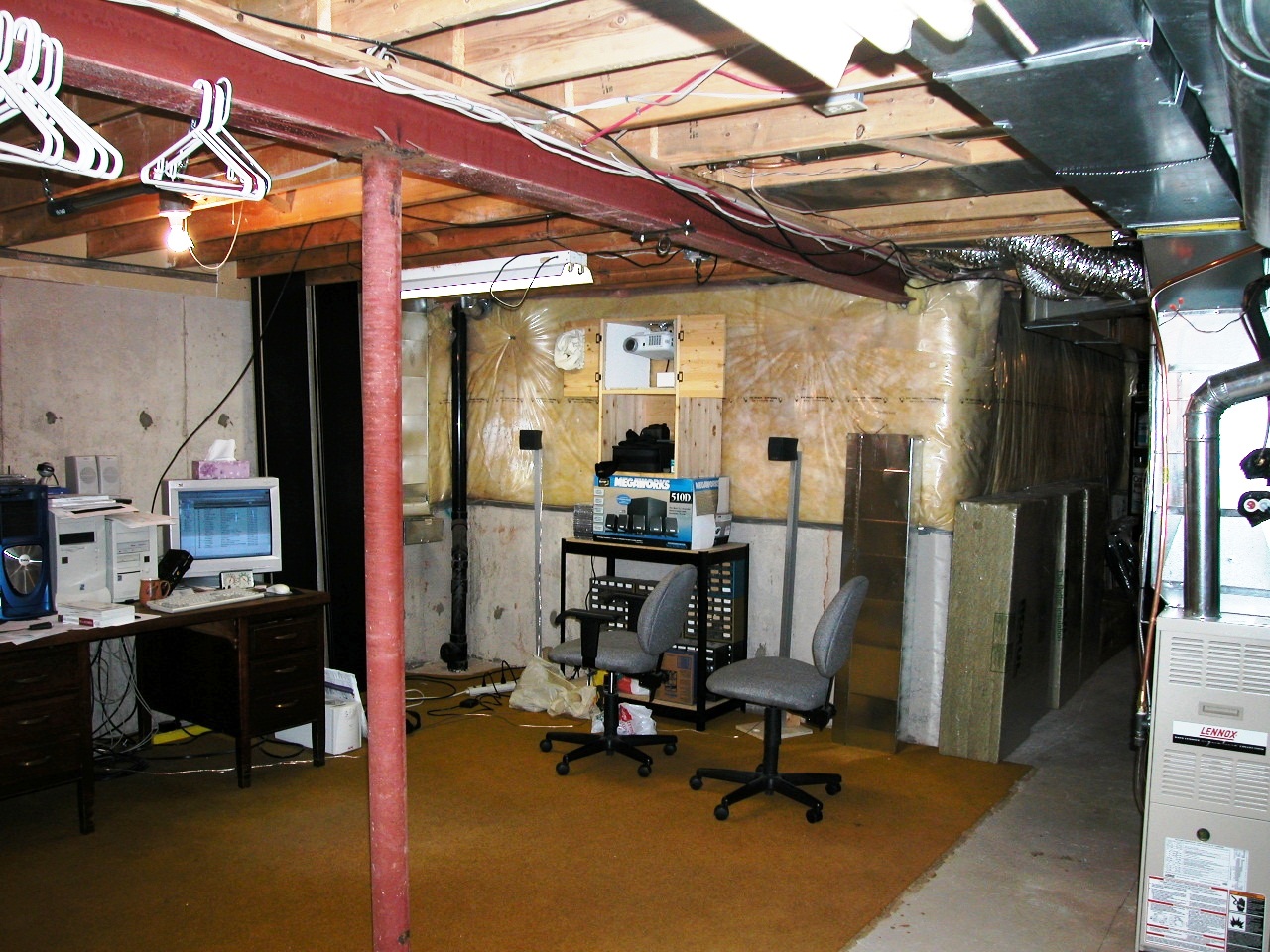
First off, a quick review of the basement.
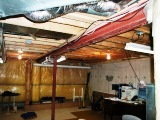
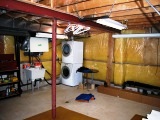
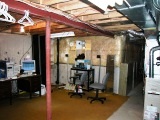
For more pictures of the basement, please click here: here
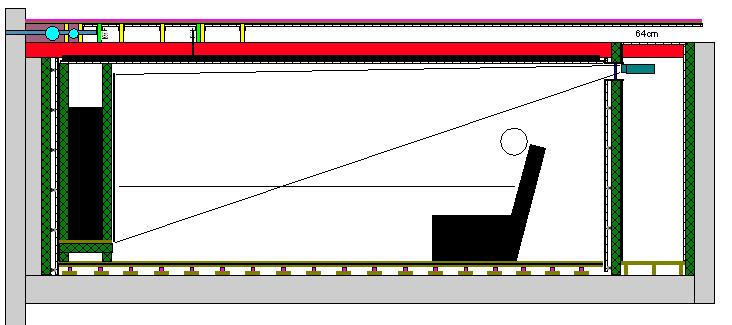
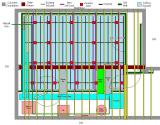
And the floorplan (subject to modification, for example the shown floating floor won't be there)
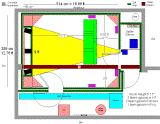
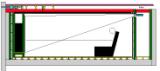
For more pictures of the old plan, please click here: here
Two Constraints.
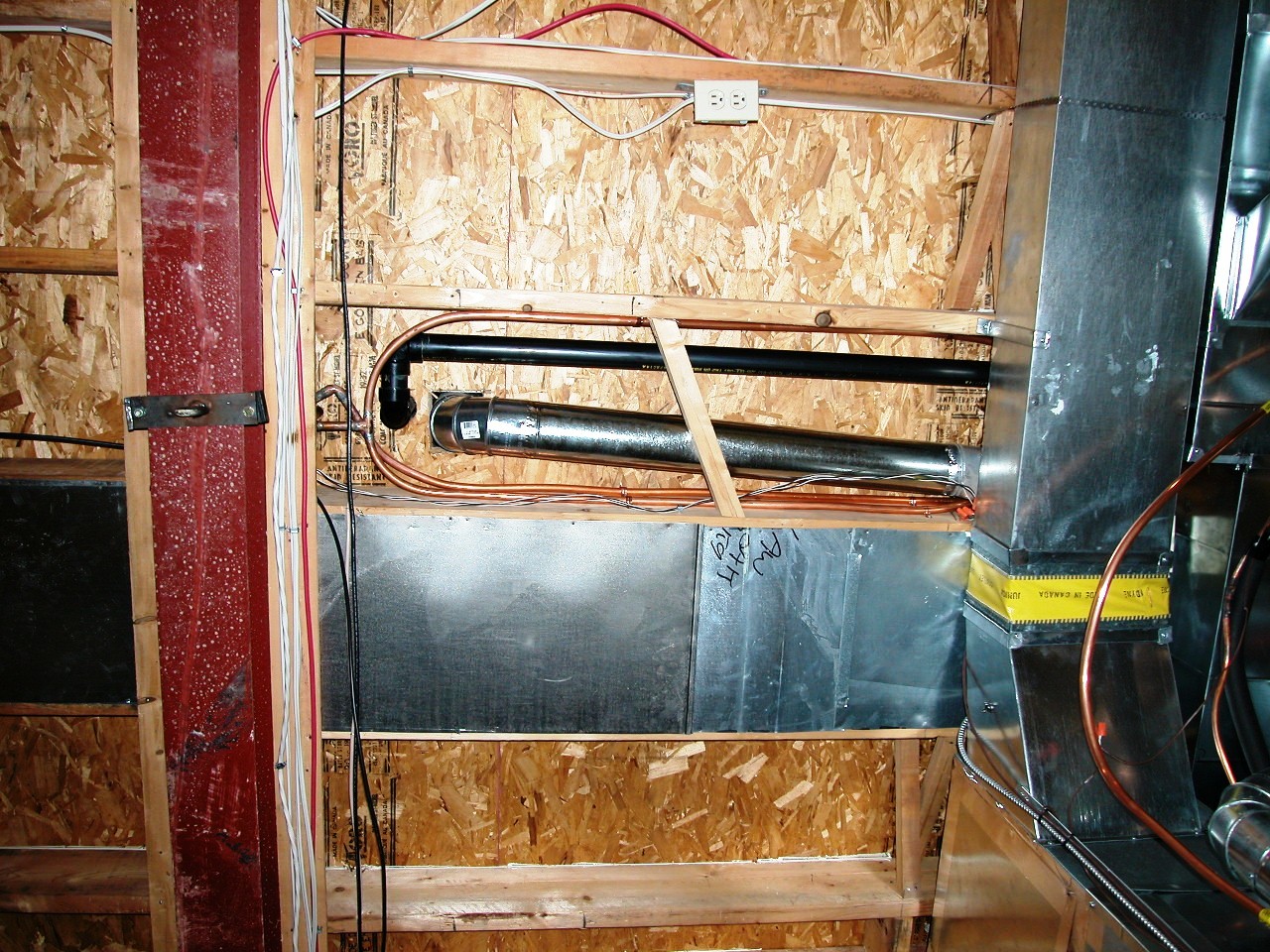
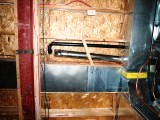
The first constraint is things like this between the joists affecting soundproofing. Here I'm laying on the floor shooting the camera straight up at the ceiling and we see the return air duct (silver), and some plumbing. There's another return air duct like this not shown, and some 6" round ductwork not shown. Fortunately all of it is higher than the bottom of the 2x8@16" joists. I'm in an end townhouse, so I want to reduce the noise traveling to the neighbours. Perhaps more importantly I have a noisy furnace and dehumidifiers that are a few feet away from that room that I don't want to hear. I want a low noise floor (NC25 or so would be nice).
The second constraint is room height. The room will occupy about 55% of the basement floor area. Ontario Building Code (9.5.3.1) requires that 75% of the basement be 6'11" or more, and that no part of the basement (i.e. ductwork and i-beam soffits) be lower than 6'5".
Here I've measured the sloped floor from the bottom of the joists (which are level and straight).

Possibility #1 - Kinetics ICW flat ceiling
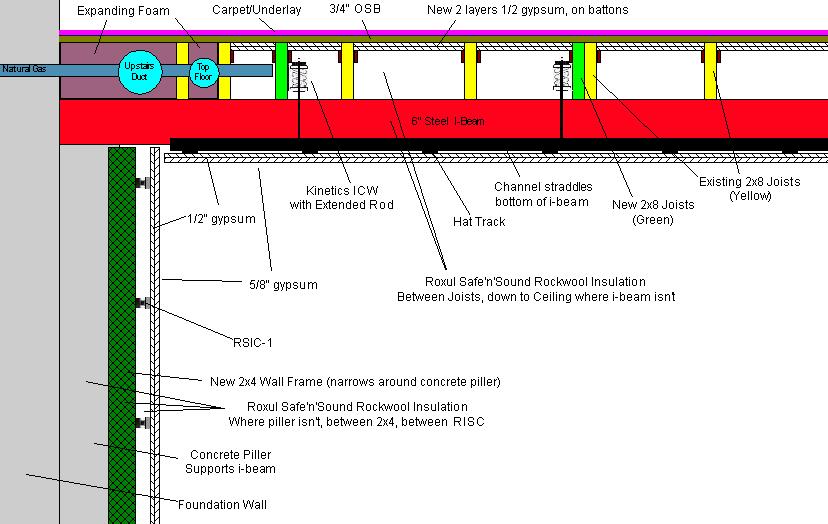
This offers the best soundproofing. It's 6.5" down from the return air duct.

The problem is floor to ceiling height. It's already too short above (the area of the too short area to the right of the lally column is 34% of the basement, which is more than the 25% I'm allowed by building code), but below when I do things like this it's worse:

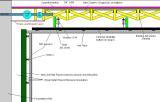
Here's some old pictures about the Kinetics ICW ceiling idea. Ignore anything about RSIC (old idea).

Possibility #2 - Minimal Soundproofing, Fake Soffit

And then adding the same ceiling treatments.

Possibility #3 - RSIC Soundproofing, Fake Soffit
Constructing this would be difficult (doors, weight loads, etc)
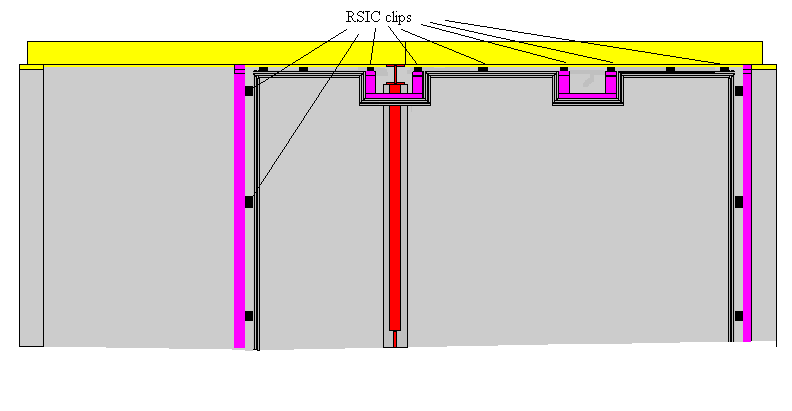
Possibility #4 - RSIC Soundproofing, Fake Polycylindrical Soffit
Poly is not as thick as the gypsum

Possibility #5 - 2x12 ceiling, through beams
The idea is to have exposed ceiling beams in 4'x4' (or so) squares, to make the addition of ceiling acoustical treatment easy to hang, simply by attaching sideways to a beam. Similarly it would get rid of any concerns I might have about ceiling strength, and my first floor bouncing floor.
Images from:
http://www.vermonttimberworks.com/trapp.html
http://www.innerwood.com/gallery/details.html
http://hometown.aol.com/noreenkloc/page8.html
http://www.doylestownlumber.com/gallery_detail.php?id=50


That's enough of exposed ceiling beams, now back to my basement
So the existing joists look like this. The red being the existing steel i-beam.

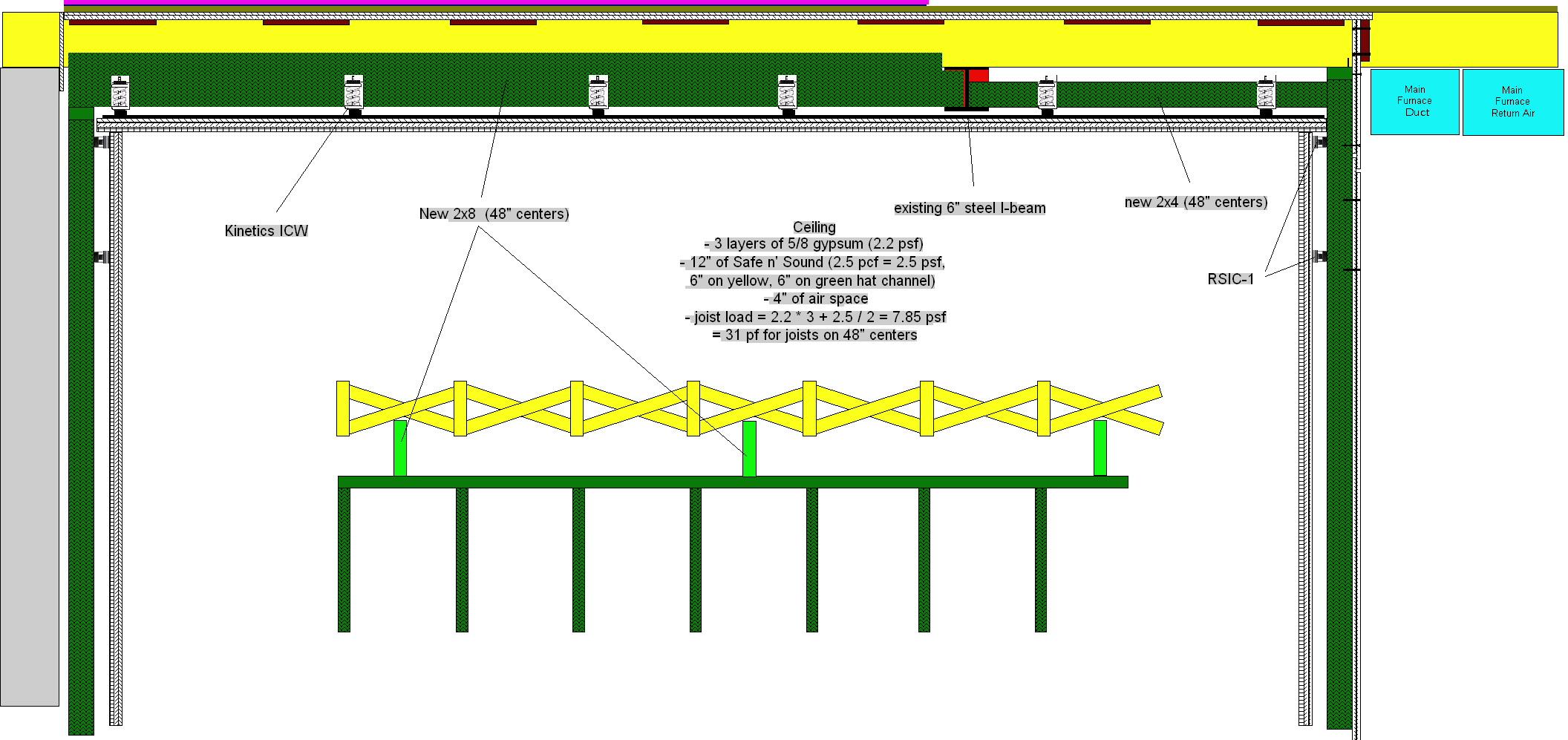
And the idea is to add a 2x12 2x8 like this, so that the bottom of the 2x12 is just lower than the bottom of the steel i-beam.

I want to double the existing 2x8's to strengthen the existing floor and reduce the floor bounce upstairs, so the 2x12 would only be every 4' like this.

Then add drywall.

Then I add a 2x6 under the drywall at 90 degrees to the 2x12's. That makes our 4'x4' squares.
At this point I have the building inspector come by, and he sees that most of the room is higher than 6'11"

Then, sneakily, I add ceiling treatment.