Home Theater Door - quotes and ideas
Assorted Door Quotes
Drop the idea of making your doors look like regular doors and instead let acoustic considerations drive the design
- this allows the DIY'er to cut corners and approach the performance and durability of expensive factory made doors. for example, use very heavy material [like 3 layers of MDF with veneer plywood on each side], with several very heavy hinge and stepped jambs and threshold [like a the door of a bank vault]
- use seals at each one of the steps in the jamb [surgical tubing?]
- use a steel plates overhanging the door edge and large magnets inset in the door frame as a latch
- also search the archives [both recent and past] for other folks approaches, just keep in mind that performance and durability may well be hard enough and that looking like a regular door may be a "bridge to far" for the DIY studio builder.
I built two closet doors (each about 18" wide and 30" tall) from scratch using MDF and a stepped design for the door and jamb. With a nice facing, they look pretty door-like, at least when closed. There are several things to be aware of:
- In practice it is more difficult to account for depth than for width and height
- especially across multiple, stepped layers. This means that it is harder to plan and build the door and jamb if your seals will be squeezed between their faces at every layer
- like with surgical tubing as described above. Instead I'd recommend using the surgical tubing on only one layer (the outermost door layer is the easiest one to get right) and use plastic V seal tape around all 4 door edges on each layer. You can buy this V tape at Home Depot - it is self-adhesive and comes in a flat roll - you'll find it with weather stripping. You cut it to size, fold it into a V and stick it onto the door frame using the self-adhesive half - allow for about 1/8th inch (~2mm) clearance on each side of the door for the tape. I also used regular weather stripping draft excluder around the inner frame of the jamb - like you would on the inside frame of an exterior door. If you have the tools and expertise (or mania 8^), you could inlay metal strips into the inner face of the door and use magnetic
seals instead of regular weather strip here.
- It is very hard to hang a door this heavy with this amount of seal evenly enough to use magnets to keep it closed - especially in a custom-built frame. I'd recommend a more robust latch - I used regular barrel latches.
- For my larger doors, I bought a solid core, fire-rated, wooden door at a wrecker and modified them. I bought the wooden door because they were heavier than the fire-rated metal doors, which seem to use a light insulation between relatively thin metal faces. I also made sure I bought a door with very robust hinges and a heavy frame. I added mineral loaded vinyl (1 lb/sq. ft) and MDF to both faces of the door. I cut the little round rubber tabs from the frame that keep the door from over-closing into the face of the frame and replaced them with surgical tubing (attached to the frame with contact cement - hot glue didn't work very well). I also used V seal and weather stripping around the sides and top. The door I got had a drop seal (a "sweep seal" that is slotted into the bottom of the door and drops
down on a spring when the door is closed) built in, so I'm taking advantage of that by ramping the sill to seal against it and I built up the sill so that the bootm of the door closes against it, and installed surgical tubing and a regular sill seal to seal against the door face. The face of the door away from the frame also has a sweep seal to seal against the bottom of the frame on the other side.
Use two doors where one would normally go. Buy a pair of
steel exterior pre-hung doors for each opening [something in the $100 per
door range suitable for the back door of a home] with good thermal/weather
sealing such as magnetic seals [not like the mag. latch described above, but
rather a seal around the edge of the door like a refrigerator] and mount a
pair of doors in a single opening, or even better modify your floor plan to
create a sound lock [I put a bathroom between my CR and LR, it has a door
into each room - to get from the LR to the CR you walk into and across the
bathroom]. If you use a sound lock try to arrange it so the two doors are
around the corner from each other not face to face. adding absorption in
between the doors on the surfaces that face each other when the doors are
closed, or in the sound lock helps performance, also they will probably have
a hollow aluminum threshold, set the doors upside down and fill this with
drywall mud so that they will be a solid mass when installed - use lots of
caulk, buy a jumbo size caulk gun [caulk is lots cheaper per unit volume in
the big tube] - if you have a compressor, get a cheap pneumatic caulk gun
and you won't end up wearing a wrist brace [like I am right now - but that's
a different story involving wire crimpers and a Pinzgauer].
I also used this strategy - the modified wooden door described above is paired with a metal fire rated door in the existing building wall. I added vinyl and MDF to the inside face of this existing door. Unfortunately, my doors have to be face to face, but they are different widths, so I avoided lining up their edges and have rigid fibre board covered with cloth on both door surfaces. The little vestibule between the doors is in the dead space between my floated inner room and the existing building, so I used rigid fibre board covered with cloth and with hardware cloth (metal mesh like chicken wire but with square holes) behind the cloth up to about shoulder height to build a little room and close it off from all the insulation in the dead space at the top and sides.
I one hundred % agree with you. Good message.
An airlock is still the cheapest way to get high insulation values.
Again, I'd recommend looking at fire-rated wooden doors from a wrecker, if you can find such a business in your locality. For a good door, you'll pay about the same (I think I paid about $160CAN - under $100US - for my door) but you'll have to deal with the seals yourself. You'll also have to pay more attention to the state of the hinges and frame than you would buying new. Even if you don't modify the door like I did, you should be able to find a heavier door than the ones from Home Depot. Also they will probably have a hollow aluminum threshold, set the doors upside down and fill this with drywall mud so that they will be a solid mass when installed. This is obviously good advice, but I'd use something heavier than drywall mud - concrete or dry-patch (for patching asphault) perhaps. Failing that, you could add sand to the drywall mud.
Felt can be used around the outside (thin edge) of a door as a gap absorber. But not as a seal.
Felt is NO insulation material but absorption material. This even means that you don't need pressure on it. It absorps as splitter silencers do. But that also means that the resulting TL depends on several factors. If you should use a felt with a width of 1/2" as substitute for a rubber gasket of a simular size, I can assure you that the felt is a very poor choise. If you use felt as an absorber to seal the door you should use the complete door thickness to create a long absorption path. And the insertion loss then is mainly defined by gap width versus gap length. So this technic is mostly used (if used) as an addition to, or supported by other types of sealing. This technic also solves potential resonances (modes) in the gap.
But the best thing is still good rubbers. One of the main problems with a good door is designing it to get enough pressure on the rubbers. And that's defined by the quality and type of the latch (+ rest design of course), which should build up pressure in a conical manner.
Those magnetic sealings are an in between solution. In fact they are meant to solve inaccuracies and guarantee a perfect mid, high frequent sealing. But the design of a magnetic seal is as such (mainly designed for thermal purposes) that you have a feet and this magnetic stripe which are connected by a VERY thin elastic housing (allowing relative large expansion), with relative poor insulation values. So a magnetic sealing can solve large gaps but at the expense of TL. (I hope you understand what I mean here)
So counting on magnetic sealings for very high insulations doesn't feel right to me.
When having a sound lock with 2 seperate doors of around 30 dB than it doesn't matter that much.
Professional acoustic doors (ca 50-52 dB doors) with double sealing will show a total pressure on the rubbers easily exceeding 150-200 kg (330-440 lb). This only works with good door accessories (hinges and latches).
Does this work easily? Yes it does.
I've used lots of such doors in TV (and other) studios. Those on TV super sexy looking assistants who have to guide people to their places and different rooms, if you see them in real live without/before make-up, it are almost children (no disrespect meant) with a weight of 45 kg (100 lb). The door leave is about 2.2 to 3 times their own weight.
Well a TV station can't permit herself to have those assistants starting a fight (in front of public, visitors, artists, VIPs) with every acoustic door they encounter. They only have to learn to act calmly (mass ratio door versus assistant)
If you then use a common frame (jamb) for both doors you destruct this system (airlock). A door normally will behave different anyhow. For a door to work properly it must be stiff. This result in a flatter curve. 2 door leaves via a common frame is in fact no double leaf system anymore (a bid a hybrid). So if you can make independent frames (depends on possibility for supports). Make the door leaves somewhat heavier than the corresponding wall leaves. You can do it with a common frame, but than the combined door must be a lot better to compensate for the flatter curve towards the higher frequencies (not that that matters that much).
In general the cheapest way to get high insulation is using 2 doors with individual supports. That makes the need for perfect sealing less important or sensitive. If you couple your walls again with a double door it's logical that you weaken the principle at that point.
A gap is as well a filter as a resonant channel.
On a good door one uses good rubbers and better two (if you use only one door)
And mostly the treshold is the most sensitive part.
Improving an existing hollow core door is very difficult.
It's either hollow but often stiffened by such a paper-like honey
comb structure.
It's really cheaper (at least here) to substitute the door by a
massive core wooden door (sold for acoustic purposes).
But maybe the door frame etc. must be adjusted replaced too.
Scott and others gave tips already. What's available depends on your
local market circumstances
Improving an existing door:
1) Door itself: glue a mass to it (mass loaded vynil, gypsum board ,
whatever).
2) Filling with sand or whatever in 99% of the cases is wishfull
thinking since the door isn't adapted/designed for such applications.
3) However chances are that the door sealing and treshold are or
become the weakest points.
4)So Look wherever to find commercial rubber or whatever sealings to
improve those, but then there is still the treshold.
5) Also often the way the door frames itself are mounted (with large
airgaps and wood to position the door) will be a very limiting factor.
Pressing mineral wool (rock or glassfiber or foam) in those gaps can
improve on that (removing slat, filling, remounting). How much ?
Depends...
Some tips to improve sealing of old doors (as well for heat as sound):
a) Open the door:
b) Paint the door edges of the door where they normally seal with
water in which dish washing soap is disolved.
c) Clean the door frame. Make sure it isn't naked wood, but varnished
or painted.
4) If dry use the edge in which door and door frame normally join as
guide for a sealing you make there with a heavy silicone stripe.
5) Now carefully close the door, pressing the door in the silicone
sealing.
6) Leave the silicone dry for 12 to 24 hours (let door closed for at
least 6 to 12 hours)
7) Open door and clean door itself to remove the dish washing soap.
8) Use a very sharp knife to cut away silicone which should have been
expanded too much.
The basic idea is that you make a perfect silicone sealing, but paint
the door side with dish washing soap before, in order to prevent that
your door remains stuck (glued) in its frame forever.
Note this technique is very suitable too to restore sealing of old
wooden windows in order to make them wind/air tight.
Treshold:
Shorten door to ca 1/2 inch above floor level.
Glue good absorption material at bottom of door. This can be rather
dense felt, foam, certain types of carpet or whatever.
So now the airgap is filled with absorption. A minor gap still
showing light underneed the door is allowed.
Then take some lightweight wooden strips, or use rubber, mass loaded
vinil or whatever.
make a minor skirting on the door as well on the in-as on the outside.
Adjust this as close as possible to the floor and vertical edges in
order to cover the absorption material. One can leave some space to
the floor.
In fact what you did is comparable with the principles of a splitter
ventilation silencer. even when still some light should be seen
underneath the door, the sound is damped.
Felt is a very good absorption material for this. Some of the
cheapest carpet materials are in fact made of polypropyleen felt.
I'm not sure if anybody has the slightest idea what I'm talking about
here. If you do please explain it better.
It are some general ideas to solve sealings and gaps, where more
professional or commercial solutions aren't applicable for whatever
reason.
In function of the door leave itself.
A massive wooden core leave, suitable for appartment purposes and
meant for pseudo sound insulation will cost here including new and
adjusted frame between 150 & 250 $.
But Scott referred to other solutions too.
Such doors can go to 28 a 32/34 dB.
A standard lightweight door with very poor sealings will often be
limited to 12 a 18 dB.
The difference is really significant.
Going higher than yhis 32 dB in practice, increases cost to obtain
those higher values exponentially.
Fastening of the door Jamb would be through the use of wooden shims to align the jambs - and then fastening with a 4" screw through the door jamb into the wall framing.
You should have shims in every location of a hinge - none are required at the door head - and a minimum of 3 on the latch side of the jamb.
Then fill the remaining air space between the door jamb and framing with rockwool - but make sure to not install it too tightly. You want a firm body of insulation - but if you pack it way to tightly you will lose isolation - not gain it. For the same reason - do not ever use expanding foams for those areas - they make bad isolators.
Recess the insulation slightly into the wall / jamb connection and seal with acoustic caulk.
Sweet - neat - and easy.
By the way - just for the record - i get tense about the thought of a single 2 x 4 wall supporting a 350 to 400 pound door in the long term - I do prefer the bridged door frame to tie the walls together - (IMHO) what little you lose in isolation value you gain long term by maintaining proper operation and alignment of the door seal assembly.
 This is the control room in a studio i constructed a few years back - if you look to the left of the window on the right you can see the door - it weights just about 350 lbs.
It uses the 3 level gasketing system I show at RO - Zero Internation drop seals (surface mounted) very high quality closures - but just single doors at each opening through a double wall system.............
We have never had a complaint using this system............... However - on the right side of the control room the iso boothyou can see the window for serves as an air lock to the main room - and on the left there is a lobby - so these doors never directly connect from the control room to the main room.
I never tested the doors - but the construction is as follows:
This is the control room in a studio i constructed a few years back - if you look to the left of the window on the right you can see the door - it weights just about 350 lbs.
It uses the 3 level gasketing system I show at RO - Zero Internation drop seals (surface mounted) very high quality closures - but just single doors at each opening through a double wall system.............
We have never had a complaint using this system............... However - on the right side of the control room the iso boothyou can see the window for serves as an air lock to the main room - and on the left there is a lobby - so these doors never directly connect from the control room to the main room.
I never tested the doors - but the construction is as follows:
Begin with a single 1 3/4" solid (particle core) door
Add
8 PSF Sheet Lead
add
3/4" Plywood
The sheet lead is glued to the door face and the pklywood is then glued to the lead - and fastened on the perimeter of the sheet at 4" O.C.
The Plywood terminates 3/4" inside the door edge..........
Thus the door seals agains a rubber seal - the plywood agains a 2nd rubber seal - and then again against a magnetic weatherstrip.
The drop seal hits both the sill assembly and presses out to seal against the side of the magnetic weatherstrip.
If all of this is constructed properly - with just the right fit - the door closure pulls the door and the magnetic strip holds it in a perfect seal - no need for any latching device. We do not have latches for the purpose of sound control on any of these doors.
We did install deadbolts for security purposes - but these are not in use when the rooms are occupied.
What you see there is a commercial pull handle - with a push plate on the opposite side.
door closure pulls the door:
One of those automatic hydrolic/spring door closes at the top of the door like this
Actually they close pretty easy - the magnetic strip helps with that - it does (however) take a wee bit more pressure to open them (once again due to the mag strip). Operation is not like normal doors.
I can only assume you weren't talking specifically about this door. Although what you describe is true even for this door, it's a bit wee bit understated in both directions. Closing it takes no effort on behalf of the human, and opening it would require overcoming both the magnetic seal as well as the automatic door closer.
Screw magnetic seals to the door. I never glue anything that I don't want to move - glue is intended to be used in conjunction with fasteners...... Which is also one of the reasons I'm not real crazy about the Pemko seals..... or velcro.......
Absolutely, the closing of the door is a piece of cake........ opening it takes maybe 15 to 20 pounds of force...... a small person can do it easily if they know what to expect - but i have seen even large strong men taken aback when they try them for the 1st time. No one expects a door that isn't latched to push open that hard.
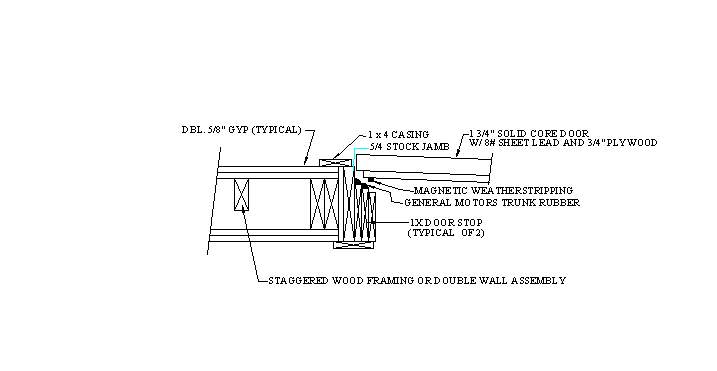
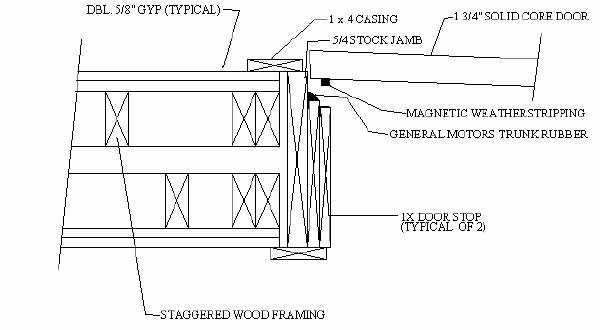
If you can see my detail at all what you'll see is this:
1st joint - at the door itself - complete seal via the gm rubber -
2nd joint - recessed about 7/8" from door face - 2nd complete seal via GM rubber -
3rd joint - recessed another 3/4" - complete seal via magnetic seal.
At the door bottom - the drop seal not only pushes the seal down onto the door bottom - but also to the side jambs (due to it spreading) and hence tight to the magnetic seal - there is no open air space with this method.
Yes i do 45 degree angles at the top corners - which i then seal with a dab of acoustic caulk.
I don't do anything for the sill installation other than seat it into a bead of acoustic caulk.
for professional studio doors i use 2 good (General Motors) rubber gaskets - plus a magnetic weatherstrip - and work my butt off on the door bottoms to try to get a good seal.
...but we could not do anything like that in a commercial establishment here - we would not come even close to meeting the requirements for the Life Safety/Building codes - or the "American with Disabilities Act" (ADA) - so for us this isn't a code compliant installation - and that is always an issue.
The sill detail would fail - in fact - it would be considered a trip hazzard - and would not meet the requirements for wheel chair access -
If you look at the Zero International Door Sills page i link to below (for example) you will see that only 4 of the 10 sills detailed on this page have the little wheelchair picture directly below the cut - that wheelchair indicates that the sill complies with the handicapped accessibility laws in the US - none of the other sills can be used where accessibility is required.
Take a look:
Zero International
When it comes to home studios - I always still design (or reccomend) that people construct in accordance with the codes - and the main reason for this is that sometimes (down the road) someone might want to begin to expand that room into a commercial business - and then would have to meet these requirements.
FYI - in the US - if a complaint is made to the Feds - a violation of the ADA can get you a $10,000 fine for each occurance - not anything i want to design someone into.
some of you may have encountered this problem; the walls in a room in a room construction are typically not as vertically rigid as normal walls & then they have to support abnormally heavy doors which when open exert a lot of strain on the wall; with close fitting this can cause the door to drag on the floor when opening & closing. the solution for this is to fit a small wheel on the face at the bottom of the door. a corresponding replaceable wear track can be placed on the floor. this is a classic detail that you sometimes see in older buildings; Lorie Anderson did some installations once replacing the wheel with a magnetic recording head and a strip of mag tape on the floor with little phrases recorded on the tape so the door sort of spoke whenever you opened & closed it.
i observed a nice detail on the stage doors of the singel theatre in antwerp; this was a heavy duty felt strip routed in all the way round the edge face of the door & sticking out about 5mm; it snugged into the frame beautifully.
compression latches. ( sort of thing you find in big walk in fridges )
another way of doing this - although it requires a wee bit more work - is to use a cam lift hinge set - the door then raises as it opens - and closes due to the cam-hinge.
The "downsize" to this is that the door does not slow as it nears the closed position (which you can set with a "door closer") - so with a door this heavy - lost fingers could be an issue.
I also made sure the gap between the frame and the wall was COMPELTELY sealed with 'Gripfill' filler adhesive.
I will state however that i would never construct a door (which flexes everytime you use it) with drywall
I used neoprene 'half round' seal. stuck to the door edge with contact adhesive. Works great, and cost about £6 ($10 ) per door i used a double seal, so £12 - I got it from Siderise Ltd in the UK, but you must be able to get it in the states.
You'll need a heavy duty 'compression latch' to pull the door tightly closed. I used one made by 'EMKA', and it cost about £12 ( $20 )
The only very small problem I have is the door warped about 2mm out vertically due to the temp difference between the cold garage and warm house. Once the temp diff has equalised. i.e. Studio finished and warm, I'll fine tune the door and jamb with a small plane ( slightly curve the jambs if needed, to enuse a tight seal all the way around ).
But even with that slight warp, it's great at blocking sound.
50 year caulk, or acoustic caulk -- neither of which dries solid (i.e. remains flexible).
You really won't gain anything with commercial steel doors......... in fact - they are generally not as good at the lower frequencies than solid core wood doors. (unless you are speaking professional quality isolating doors at 3 grand a pop)
a google search on Brass Fitch turns up a bunch of those window fasteners that you turn 90 degress and they lock with a cam.
I have successfully used dead-bolts for this purpose.
Just make certain the bores are as small as they can be - a dead bolt has a fair amount of mass - won't exactly equal the door - but won't bust the ban either.
surface-mounting a latch-bolt to the edge of the door and an electric strike plate (like receptionists buzz open) opposite it right on the frame, with buttons wall-mounted on both sides of the door?
I've actually located such a strike plate on Home Depot's website, product #892800, UPC 49793390219, for $22 a pop
but based on my experience when having doors installed, they were heavy 1 3/4" solid core. The pre-hung jamb was placed as perfect as possible. The door layed evenly on all surfaces of the stop.
The key to a tight fit was a quality commercial door closer, set to gently allow close damping, while, when reaching the stop, pulled tight against it. Then I used push/pull plates and large handles, and kick plates for looks, and to protect against gear punching through. These systems are really effective in sound locks, set to push push to get in the main room, or pull pull if a fire hazard. Never had a leakage problem with well installed doors.
Spoke with Greg Rowell at Dictator (thanks, Ruzo). He says this one, the VS2000 seals with 25 pounds of pressure. It's about $90
Dictator VS2000
I found an LCN 4041 closer on sale for under $100 (list $280), and ordered one to try. They say the spring can be cranked up to apply up to 18 pounds of pressure to keep the door shut.
magnetic strikes: Lee Electric model No. 220.
Even better, since intended for surface mount, would be Lee Electric model No. 3 or 6, but these are about twice as expensive as the No. 220 shown here.
Lee Electric
non-electric (mechanical) door lock
THAT HAVING BEEN SAID - personally I think the double door method is overkill and eats up valuable real estate within the studio.
I would much rather construct a door using a 1 3/4" solid core door - then line it with 8 pound per square foot sheet lead - cover that with 3/4 plywood and use that in a single door assembly. Gasket it very well and you will have all the isolation you want - the windows you want to use will do just fine in that door assembly. Just have someone there to help you hang the door - it weighs about 350 pounds when your all done.
Use 4 commercial 5 x 4 1/2" ball bearing hinges to carry this monster - and use a full 5/4 stock door frame - do not rabbet the frame out.
I just finished hanging 5 doors that I made up - started with 1 3/4 solid core exterior door (flake core), 1/8 sheet lead (Vulcan Lead) on one side and a layer of 3/4 MDF on both sides - these doors are hanging on full 5/4 hardwood jambs with the adjustable jam screws on 5 heavy-duty stainless, ball bearing hinges. Tomorrow will be installing the seals - full workup from Steve at ZERO International - all adjustable on the preimeter and including atomatic drop down seal for the bottom - HEAVY MoFo's but should do the job!! One of the doors has double glass (laminated 13/16 and 17/16).
The doors have between 1/16 and 1/8 space between the door and jams - I have beveled the leading edge of the doors to help with the clearance of the long dimension of the door (the diagonal dimension when opening). The tracking/control room side of the doors is covered with auralex foam (1" pyramid) - the other side is covered with a thick velour type material that wraps around from the face over the sides, tops and bottoms and runs into the other face side of the door - on this side (the seal side) I have screwed 1 inch strips of 1/8th aluminum to cover the edge of the fabric and to make for a more positive contact with the adjustable Zero seals. I also have some brass spring strip from Zero to mount on the jam/door contact edge for additional sealing.
Paul: I've used half round neoprene strip ( 8mm radius ) for my studio door(s).
It's worth mentioning that although the neoprene strip is soft when you press your finger in it, once you start trying to compress a few feet of it ( around 16 feet for a regular size door ) you need a LOT of pressure.
I've actually used TWO neoprene strips around my door. Double seal bank vault jobby. Which means I got over 32feet of it to compress. ( this is a 4" thick door btw )
My solution is a compression latch. And it works well.
And something I've found from experience. Even with a 4" solid door, the compression latch will warp the door very slightly in the middle where the latch is actually compressing. which means LESS pressure at the top and bottom of the door.
The way around this is to build in a slight amount of concave curvature in your door jambs to compensate. 1/10th inch is about right for my door. A thinner door will need abit more. Something you goota tweak and fine tune.
The fewer doors the better. If there are more than one, the room will be used as a passageway -- family members will walk through it on their way to other parts of the house.
Consider using a pre hung, exterior-grade, Fiberglas model with thrshold and airtight weather-striping all the way around. These doors are easy to install and they do a great job containing the noise inside the room while keeping external noises out. Most good finish carpenters can install these doors in their sleep, and they provide a nice, tight seal.
Always use screws, not nails.
Building Code in some areas requires a door width on both sides of a door. Usually that's not a problem because there's a room or hallway on both sides of the door. In some places that's waved if there's not enough room for a person to stand between the two doors.
"Communicating Doors" seems to be the correct term for an acoustical air-lock.
![]() http://www.johnlsayers.com/phpBB2/files/espacio_entre_puertas_421.jpg
http://www.johnlsayers.com/phpBB2/files/espacio_entre_puertas_421.jpg
Dan wrote should the sill plates be attached directly to the concrete floor or should I isolate them?
One thing that's commonly done is the sill plates are bolted to the floor, but a gap is cut in the concrete floor first, then filled with silicone to ensure decoupling (assuming you're talking about a concrete pad poured on earth).
Here's another way that has worked pretty well for me so far:

That black stuff is 1/2" thick Armaflex closed-cell foam. I bolted the plates down, using the best homebrew method of decoupling I could, where the lag bolt never touches the concrete directly, but is buffered from it by vinyl, plastic, or a rubber washer. As an alternative, I bet you could just as well just glue the foam to the floor with heavy duty construction adhesive, and then glue the sole plate to the top of the foam.
I came across this idea of using Armaflex to decouple a few years ago, as it was recommended by the now defunct Systems Development Group in Maryland. In theory the foam may be compressing too much, but in practice it seems to work great so far. Even with over 6 pounds per square foot of MDF and sheetrock on the wall, the total weight of the wall is still only 1.5 pounds per square inch of weight on the foam, so I don't think it's a biggie. The true test is to just listen how much sound gets transferred from one stud frame to the next, and from the simple tests I've done, I don't think much sound is tranferring at all.
An advantage to this method over RC is twofold:
1. You can add cross-bracing to the framing to make the whole wall stiffer, so that it doesn't flop as much as RC-mounted paneling would, so it won't resonate as long.
2. If you want to put a door in each wall, you don't have to contend with RC. Just bolt the door frame to the rest of the stud frame.
should the drywall run right down to the floor, or should I raise it up a bit - if so what to do about the gap??
Stop 1/4" short of the floor and fill the gap with flexible acoustic sealant.
I would just put the sills on the Armaflex, and caulk with acoustic sealant. I'm hoping the Armaflex will maintain its elasticity for as long as I need it to - I'm 54 and it should last longer than my hearing. But I know that acoustic sealant can last a lot longer than that. Besides, the Armaflex ain't cheap, it's over a buck a square foot. I bought a 70 foot long roll of it 4 feet wide for around $350, I think. Like I said, it's working for me for now, but to play safe, you might want to throw down a layer of vinyl barrier beneath it, or bump up from 1/2" to 3/4" thickness of Armaflex.
Lee
The thread with Rod's Comment
I actually have done this (and on a world class recording studio to boot) - with very good results.
You can use 8 psf sheet lead and 3/4" plywood (or MDF if you so choose).
Glue the sheet lead to the door using PL-400 (or any other decent construction adhesive)
Once the adhesive sets - attach the plywood to the assembly using liberal amounts of the 400 and sheet metal screws.
Pre-drill the plywood and door - and pre=tap the steel door to assure the screws attach properly.
If you hold the plywood 3/4" inside of the door sides and edges it will allow you to do a nice multiple seal assembly.
Add a good quality sill and drop seal and you should be fine.
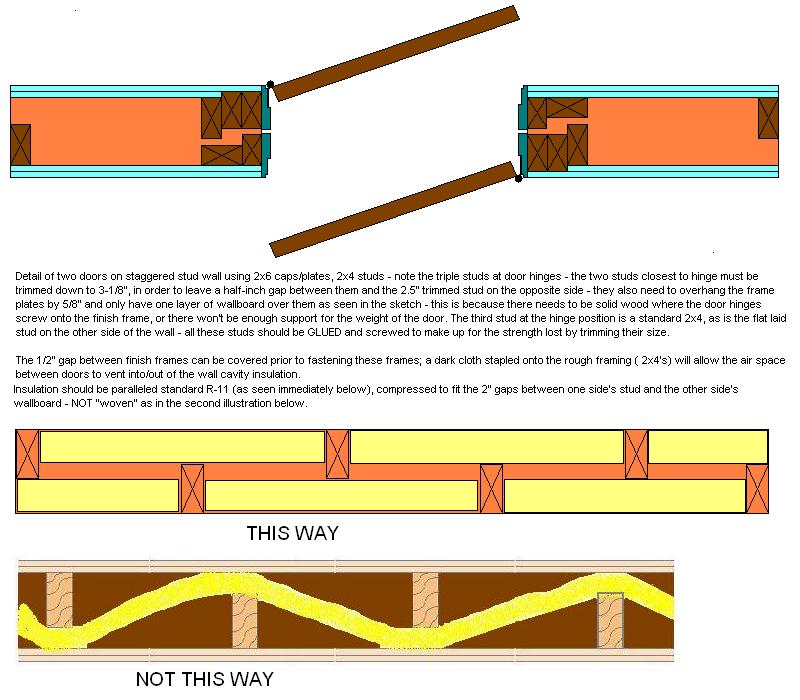
from: Knightfly at John Sayers' Installing a door - anything I should keep in mind?
Some door estimates with Insul.exe Theoretical Wall calculator
A red oak door, solid, 37mm thick gives
STC-30
63hz 20db
125hz 24db
250hz 28db
500hz 31db
1khz 27db
2khz 33db
4khz 42db
lead (white pigment) 4085 kg/m^3 (255 lb/ft^3) at 12.5mm (1/2") gives 10.625 lb/ft^2 (51 kg/m^2)
red oak 705 kg/m^3 (44 lb/ft^3) at 37mm (1+1/2") gives 5.5 lb/ft^2 (26 kg/m^2)
dry plywood 935 Kg/m3 (58 lb/ft^3) at 20mm (3/4") gives 3.625 lb/ft^2 (18.7 kg/m^2) {this seems really high to me}
So the door is 19.75 lb/ft^2 (or a 7'x 2.5' x 2+3/4" door is 345 lbs)
Also the door is 95.7 kg/m^2 and 69.5mm thick, and has an average density of 1376 kg/m^3 (85 lb/ft^3)
(modeled as a single leaf of density 1376 kg/m^3)
STC-40
63hz 31db
125hz 33db
250hz 29db
500hz 34db
1khz 42db
2khz 51db
4khz 59db
(modeled as a two leafs. 12.5 mm of density 4000 kg/m^3, and 57mm at 750 kg/m^3)
STC-41
63hz 31db
125hz 35db
250hz 38db
500hz 35db
1khz 39db
2khz 48db
4khz 50db
VS
double airlock doors of plywood/gypsum/plywood (light 1/2" ply), with a bit of 705 stuck the back of one of the doors, with 8" between the doors, gives
Each door is 25.9kg/m^2 (5.4 lb/ft^2) (or a 7' x 2.5' door is 94lb)
STC-71
63hz 35db
125hz 47db
250hz 61db
500hz 69db
1khz 78db
2khz 79db
4khz 75db
Some Paul Woodlock Door estimates with Insul.exe Theoretical Wall calculator
5 layers of 3/4 MDF 750 kg/m^3 at 22mm (3/4") gives 16.5 kg/m^2 per layer
1 layer of 5/8 gypsum 690 kg/m^3 at 16mm (5/8") gives 11 kg/m^2
( HDF is 850 kg/m3 )
So the Paul door is 93.5 kg/m^2 and 126mm thick, with an average density of 742 kg/m^3
STC-40
63hz 31db
125hz 33db
250hz 29db
500hz 34db
1khz 42db
2khz 50db
4khz 55db
Then
Two of the same Paul doors with 8" space between and some insulation on the back of one of the doors.
STC-71
63hz 55db
125hz 65db
250hz 62db
500hz 69db
1khz 85db
2khz 101db
4khz 112db
VS
Two of Rod's doors, 8" apart, with a bit of insulation
STC 72
63hz 55db
125hz 65db
250hz 62db
500hz 69db
1khz 86db
2khz 103db
4khz 120db
These numbers are beyond belief. On the other hand it is an 800 pound doorway. I've heard a rumor that mass and space and insulation are good things for sound isolation.
I haven't taken into account the effect of the seals, nor the gaps around the door, which in this range has got to be significant. Rod's door, being mostly stock, should fit very closely. Paul's door, being bank vault and double sealed, should be not too bad either (not as closely fit, but more seals).
If I assume that both doors have an 1/8" gap all the way around (optimistic given that these doors are 300lbs), and 30db seals in that gap at all frequencies (they're probably better at high frequencies, so this assumption is probably going to level the db loss in an inaccurate way), and the doors are 7' x 2.5', then
Door area: 17.5 ft^2
Seal area: 0.2 ft^2
Rod's door, doubled with 8" air lock, including seal effects, becomes (using the multiple TL by area estimator )
63hz 49db
125hz 49db
250hz 49db
500hz 49db
1khz 49db
2khz 49db
4khz 49db
That's more believable, although it's kind of disappointing. I may have overdone the effect of the seals in a double door system.
Rod says: By the way - you aren't giving the door seals enough credit - you can purchase doors and seals good up to (about) 70 STC - (that's for a single leaf) so maybe you want to rethink that calculation.
AVSForum sfogg's door
I'm in the process of attempting a DIY door to (hopefully) limit sound transmission.
The outsides of the door are 3/4" Maple plywood. The plywood is seperated by 1x6 boards along the outside of the door with an additional board going through the middle of the plywood boards for more support
The 1x6 don't go out to the top and bottom of the plywood, they sit in far enough so that the Zero International automatic door bottoms can be fit between the plywood.
In the small air space between the plywood I was planning on using fiberglass but might see if I can get some Dynamat locally. The door is almost complete at this point, I just need to glue down to other sheet of plywood and then let it cure and mount it.
I'm hoping to not need a typically door knob and instead will be trying an automatic door closer to see if that will keep the door closed by itself. If so I'll just put a push plate on one side and a pull handle on the other.
I will be finishing the Maple when the door is mounted.
Shawn
RecordingOrg Rod, which seal and steel? thread

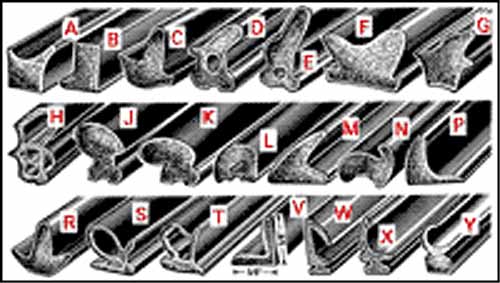
The type P can be found here:
JC Whitney Auto parts - MOLDED SPONGE RUBBER WEATHERSTRIPPING KIT FOR DOORS AND TRUNKS
The trunk rubber is "P" style.......
I think you missunderstood something i said - i don't reccomend steel between the door and plywood - i reccomend 8 psf sheet lead.
THAT IS A LOT OF MASS.
The strip for the magnetic weatherstrip is then mounted to the 3/4 plywood applied over that.
Go to a local commercial door and hardware supplier in your area = you will be able to by the entire magnetic kit = the strip is usually an L-shaped piece - you just attach it to the edge of the plywood.
--------------------
Zero style door seals
Zero International
Zero noise and doors pdf
For door bottoms, ZeroInternational.com makes some great ones. Combine a saddle (threshold) like their 564, 565, or 566 with a door bottom such as their 365 or 367 for a really good bottom seal.
For more help with installation details, just give Steve at Zero a shout. He'll help you in a New York minute.
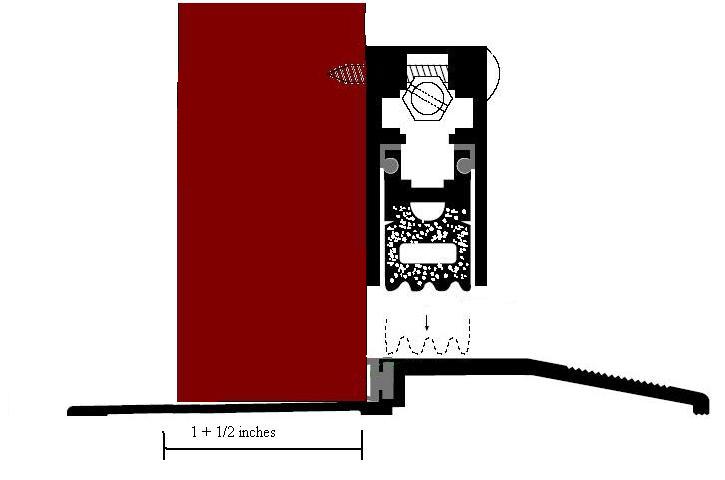
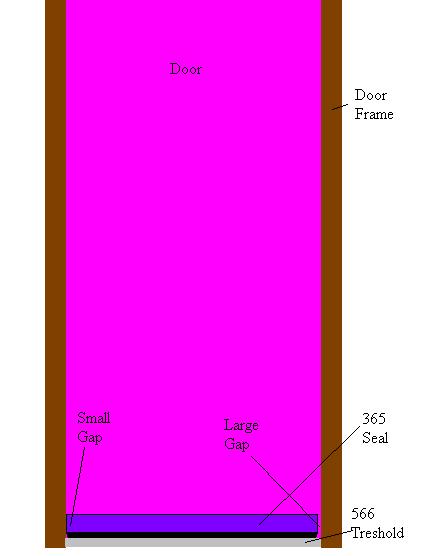
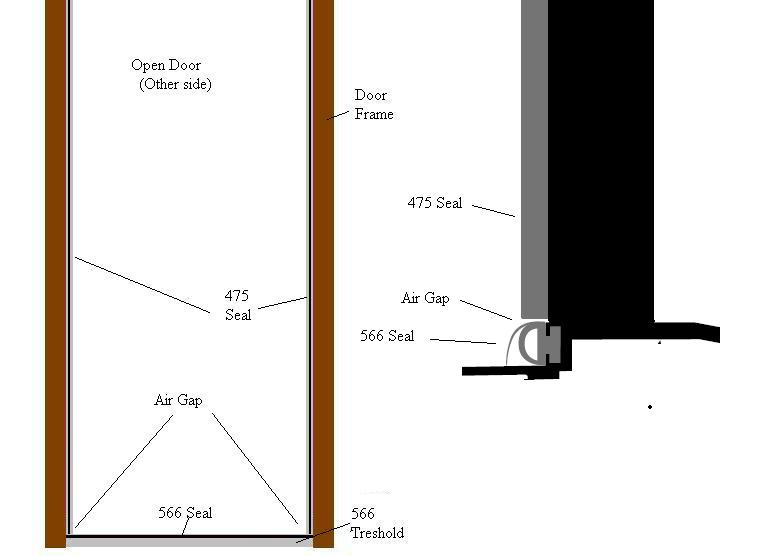
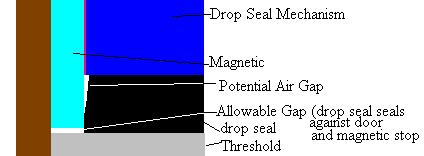
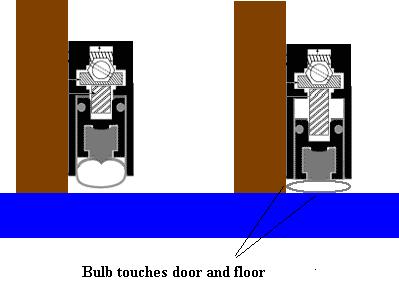
Other door pictures
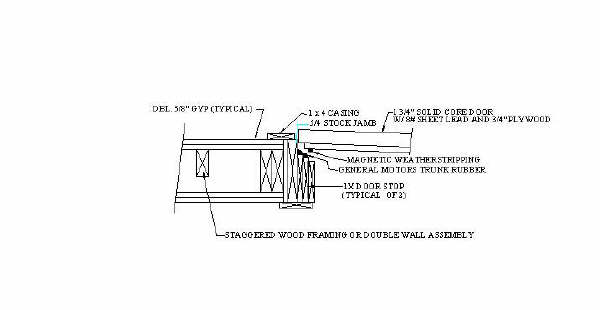
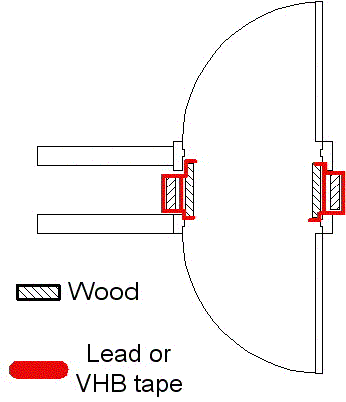
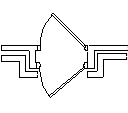
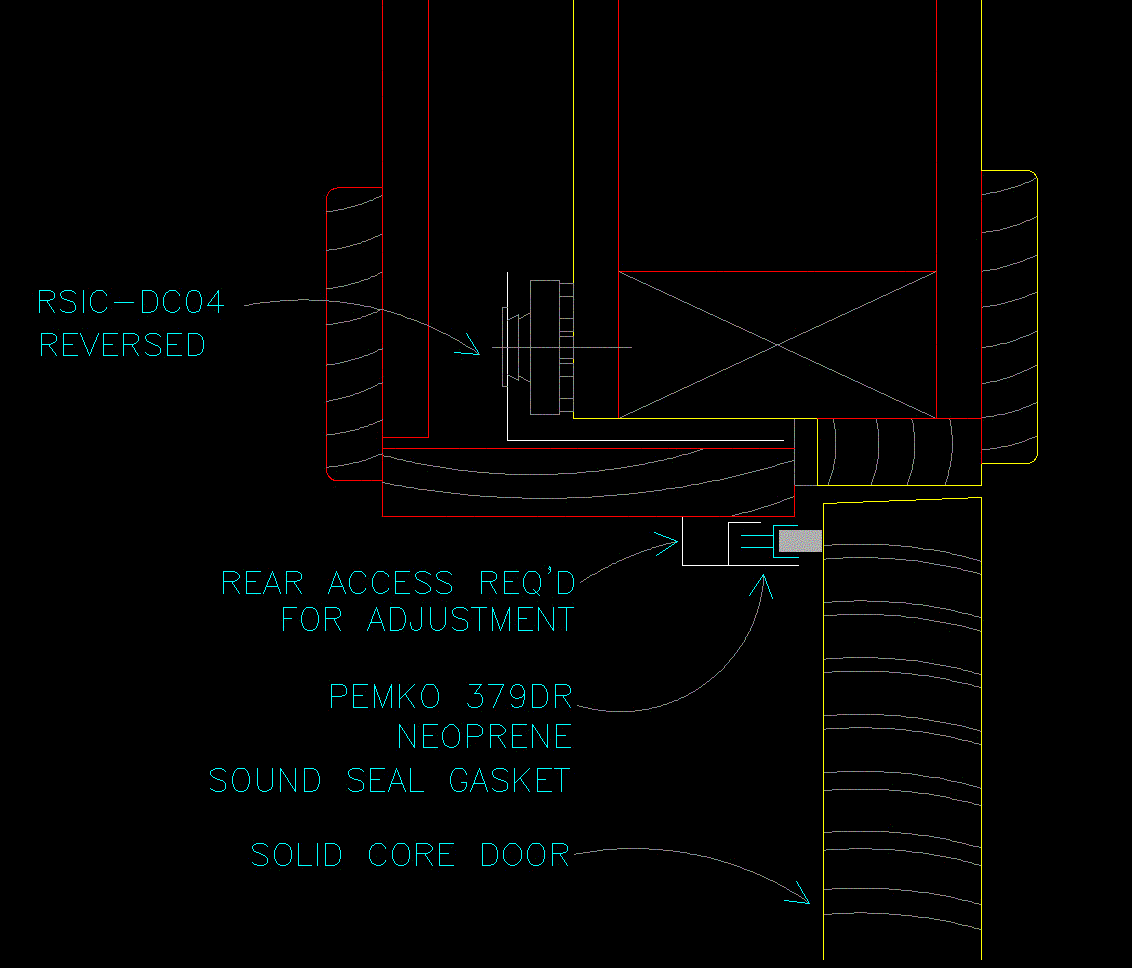
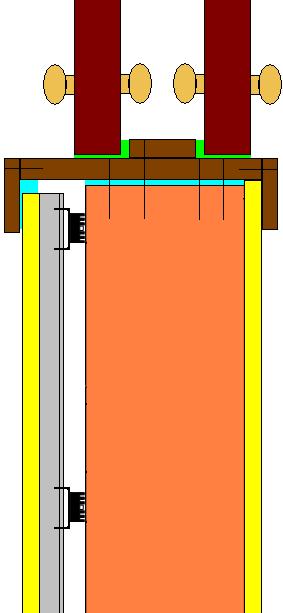
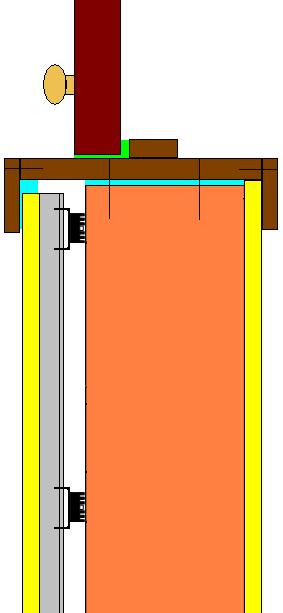
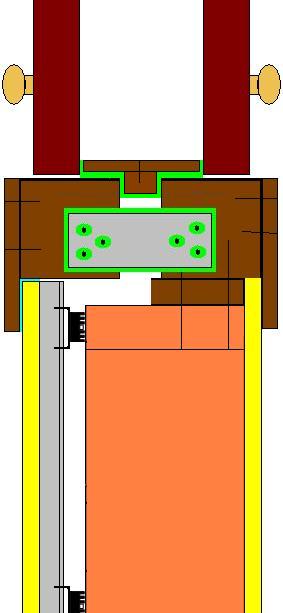
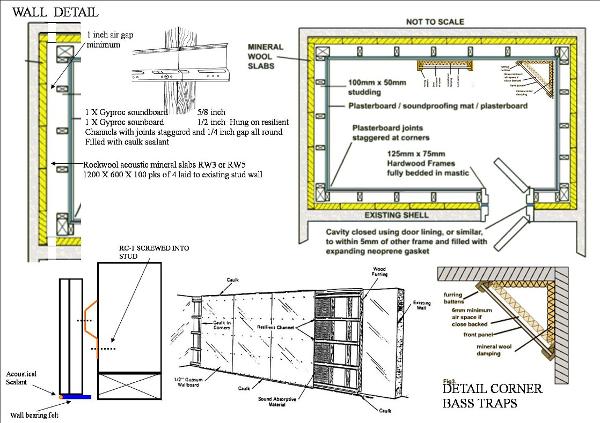
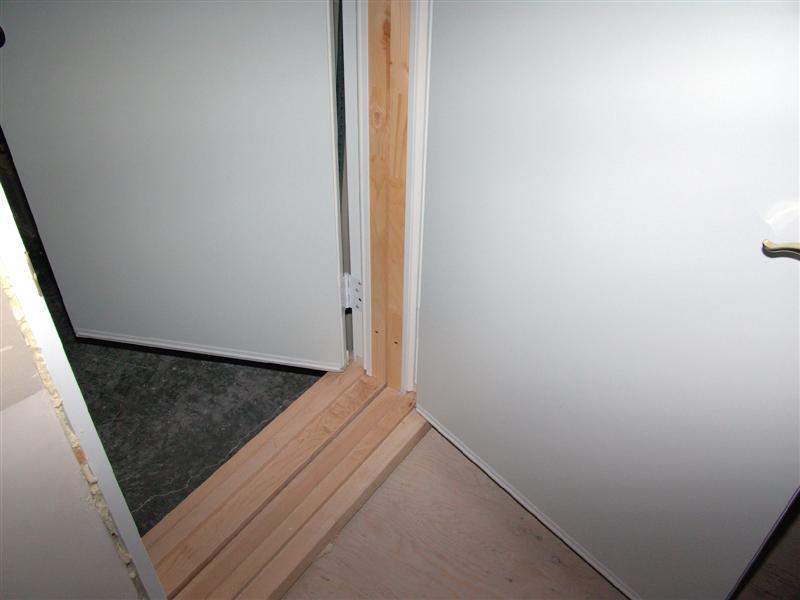
![]()
Master Handbook of Acoustics
Master Handbook of Acoustics at Amazon.com
In the 4th edition, pages 175 through 178 there are several ideas
sound locks
filling a hollow core door with sand
Figure 8-10 shows a perforated hardboard door edge (thin sides) with a bit of mineral fiber behind it to make a gap absorber panel in the door itself
soft pad on the door surface may add a bit. A plastic fabric over 1" foam rubber sheet quilted with upholstery tacks
Assorted Door links
"Room In A Room" by Custom Audio Designs
Knightfly's door comments
Krieger STC 56
SecurityAcoustics $1000 STC 53
SoundSecure $3000 STC 47
Owens Corning QuietZone Premdor STC 25
Paul Woodlock's 400 lb Door
military door with balistic rating
Four sided Magnetic seals. SCREW-ON PART #SC-625-812, 32" +/- 1/8" X 75" +/- 1/4" O.D. = $50.50/EA. (STANDARD COLOR GRAY)
DELIVERY: 2-4 WEEKS
Overly Door - Hinges, Closers, Locks, Flushbolts
Visco elastic peel and stick sheets - search for item 9709T19
Auralex SheetBlok-Plus limp-mass with glue back
Home Recording Door Recipe
AVSForum Sound lock as a theater entrance
SAE Doors
Studiotips Isolation Doors FAQ
Firesonic STC51 200-lb door
(three pics)
(the frame)
Above quotes stolen from Unwitting Contributers:
Scott R. Foster
John
Eric Desart
Rod Gervais
Paul Woodlock
jazzman_in_pa
GRBoomer
Mike Gernhart of Pac International
from posts at:
StudioTips
Recording Org's Acoustics & Design
John Sayer's Studio Design
AVSForum Home Theater Builder
SAE Windows and Doors